A recurring blockage in an older Metairie home led to a cast iron sewer lining project beneath the slab. Advanced Drainage Repair cleared the obstruction, evaluated the affected sections and used trenchless CIPP lining to rehabilitate two four-inch cast-iron runs while limiting the amount of excavation required.
Homes built across Metairie and the Greater New Orleans area during the mid-1900s commonly contain cast-iron drain and sewer piping. These pipes can remain serviceable for decades, but internal corrosion, scaling and deterioration eventually reduce their capacity and cause recurring drainage problems.
Project at a Glance
- Location: Metairie, Louisiana
- Property: Residential home built in the 1960s
- Primary issue: Failing cast iron with a blockage approximately 11 feet from the front cleanout
- Pipe rehabilitated: Two sections of four-inch cast iron—approximately 35 feet and 7 feet
- Additional work: Blockage clearing, rear two-way cleanout installation and toilet access
- Repair method: Trenchless cured-in-place pipe lining
The Problem: A Blockage Inside Aging Cast Iron
The homeowner was dealing with a blockage in an older under-slab cast-iron drainage system. The obstruction was located roughly 11 feet from the front-door cleanout. In a pipe of this age, clearing the immediate blockage is only part of the job. Heavy internal scale and deterioration can continue catching debris, slowing flow and creating the conditions for another backup.
That is why recurring drain trouble in an older home should not be treated as an automatic “snake the line and leave” situation. A professional drain camera inspection helps determine whether the problem is an isolated obstruction or evidence of a deteriorating pipe that needs a longer-term repair.
What ADR Found
The project involved a failing cast-iron system beneath a 1960s residence. The repair plan identified two four-inch sections requiring rehabilitation: a main section measuring approximately 35 feet and a second section measuring approximately 7 feet.
The access plan also required work at the rear cleanout, toilet access and removal of a restrictive cleanout ring near the front entrance. Addressing access correctly matters because trenchless lining still depends on proper cleaning, inspection and controlled entry into the host pipe.
The Repair Plan
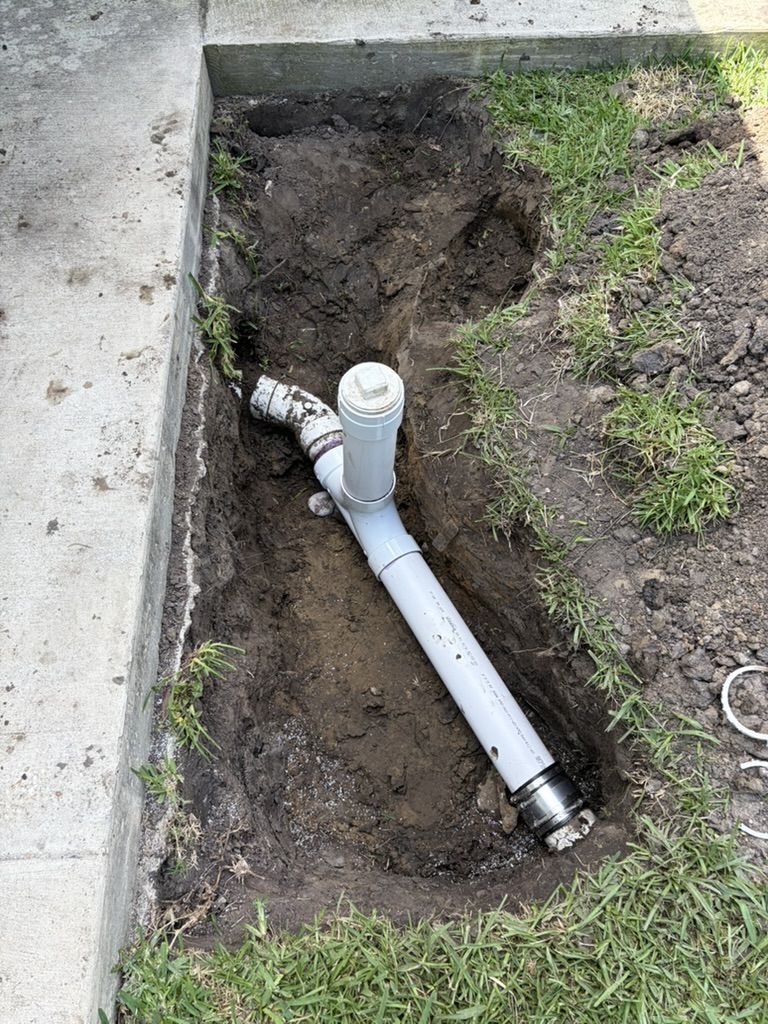
ADR’s scope combined cleaning, access improvements and trenchless sewer rehabilitation. The blockage was cleared so the pipe could be prepared and evaluated. A rear two-way cleanout was installed to improve access, and the two deteriorated cast-iron sections were rehabilitated using cured-in-place pipe lining.
CIPP lining creates a new pipe within the existing host pipe. Once the line has been properly cleaned and inspected, a resin-saturated liner is positioned inside the damaged section and cured. The result is a continuous interior pipe that can bridge corrosion, cracks and worn areas without excavating the entire under-slab line.
Why Trenchless Lining Made Sense
Traditional replacement of under-slab sewer piping may require extensive concrete removal, trenching or tunneling. Those methods are necessary when a pipe has fully collapsed, has severe offsets or cannot support a liner. In this Metairie project, the identified sections were suitable for rehabilitation, allowing ADR to repair the failing cast iron while limiting disruption to the home.
Trenchless lining is not the right answer for every damaged sewer. The decision should always follow cleaning and camera inspection. ADR evaluates the host-pipe condition, access points, diameter changes, connections and structural defects before recommending lining, spot repair, excavation or a combination of methods.
The Completed Result
ADR completed the cleaning, access and lining scope for both four-inch sections. The project addressed the immediate blockage and rehabilitated the failing cast-iron runs without a full-length tunnel beneath the residence. The new two-way cleanout also provides better access for future inspection and maintenance.
This type of project shows why early diagnosis matters. When an aging cast-iron line is still structurally suitable for rehabilitation, the property owner may have more repair options than after the pipe has completely collapsed.
Signs Your Metairie Home May Need a Sewer Evaluation
- Recurring backups after the drain has already been cleaned
- Multiple slow fixtures in the same area of the home
- Sewer odors near drains or cleanouts
- Heavy rust or scaling visible during a camera inspection
- Moisture or unexplained settlement near an under-slab drain line
- A home built before modern PVC drainage became common
If you are experiencing these warning signs, the first step is a proper inspection—not guessing at the repair. ADR serves Metairie, New Orleans and surrounding communities with camera inspection, cleaning, descaling, trenchless lining and targeted excavation solutions.
Schedule a Trenchless Sewer Evaluation
Advanced Drainage Repair can inspect your cast-iron system, explain what the camera findings mean and determine whether CIPP lining or another repair method fits the pipe’s actual condition.
Call 504-321-3627 or request a sewer evaluation online.
For more practical guidance, visit ADR’s Sewer & Drain Resources hub or review our Greater New Orleans trenchless pipe-lining services.