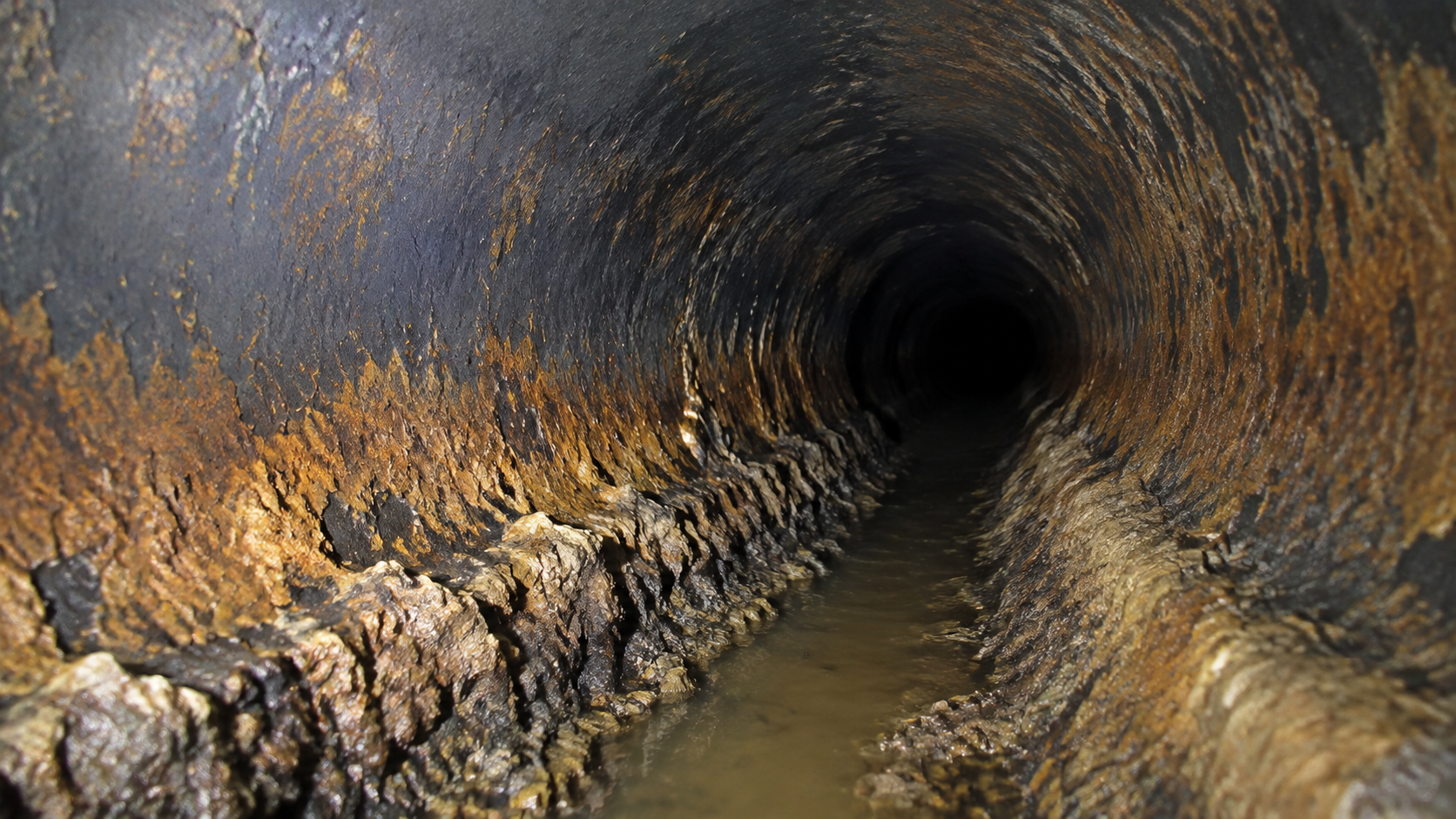
Recurring sewer backups, slow drains in several fixtures, persistent odors, visible corrosion, and drain cleaning that only provides short-term relief can all point to a deteriorating cast-iron line. But symptoms alone do not tell you whether the answer is cleaning, lining, spot repair, tunneling, or replacement. The first real step is to see what is happening inside the pipe.
Many older New Orleans properties still rely on cast-iron drain lines, including piping beneath slabs and other hard-to-reach areas. Cast iron was built to last, but years of wastewater exposure, moisture, corrosion, buildup, movement, and joint problems can reduce flow or damage the line. The warning signs often appear gradually—then become expensive when the same problem keeps returning.
Seven Warning Signs to Take Seriously
1. The same drain keeps backing up
A single clog can happen in any system. The concern grows when a line is cleared correctly and the backup returns in the same area. Corrosion and heavy internal scale can leave a rough, narrowed surface that catches paper and waste. Cracks, offsets, root intrusion, or a damaged section can create the same pattern.
2. Several fixtures are draining slowly
One slow sink may be a local trap or branch-line problem. When toilets, tubs, showers, or floor drains in the same area slow down together, the restriction may be farther downstream in a shared drain or sewer line.
3. You hear gurgling or notice changing flow
Gurgling can come from an obstruction, a venting issue, or changing air and water movement inside the drainage system. It is not proof of cast-iron failure by itself, but it should not be ignored when it appears with slow drains or repeated backups.
4. Sewer odors keep returning
A persistent sewer smell may come from a dry trap, failed seal, vent problem, loose connection, or damaged drain line. If basic causes have been ruled out and the odor returns, the piping should be evaluated instead of covered up with deodorizer.
5. There is unexplained dampness or water damage near the line
Moisture around a wall, cabinet, floor, crawlspace, or slab can have several sources. A leaking drain is one possibility. Sewer leaks beneath a slab may not appear directly above the damaged section, so the visible symptom and the actual defect may not be in the same place.
6. Exposed cast iron is rusting, flaking, or leaking
Visible surface rust does not automatically mean the whole system has failed. Heavy flaking, cracking, wet joints, active drips, or soft deteriorated areas on exposed piping are stronger reasons to investigate the connected line.
7. Cleaning helps—but only for a short time
Drain cleaning can remove a blockage and restore flow. It does not rebuild missing pipe, seal a crack, correct a separated joint, or replace the bottom of a channeling line. If each cleaning produces a shorter period of relief, the underlying pipe condition may be driving the problem.
What a Sewer Camera Inspection Can Reveal
A professional drain camera inspection creates a visual record of the pipe interior. Depending on access, flow, buildup, and picture quality, the technician may be able to identify:
- Heavy rust scale, debris, grease, or other restrictions.
- Cracks, holes, separated or offset joints, and visible leaks.
- Tree-root intrusion and the opening where roots entered.
- Low spots or standing water that may indicate poor grade or a sag.
- Channeling or deterioration along the lower portion of the pipe when it is visible.
- The location and condition of accessible branch connections.
The U.S. Environmental Protection Agency describes CCTV as an established way to assess sewer-system conditions. A camera mainly shows the visible inside surface of the line; it does not measure the full pipe wall or the soil supporting it.
That is why a responsible recommendation combines the video, the property symptoms, access conditions, the pipe material, and field judgment. If the line is blocked or heavily scaled, cleaning may be required before the camera can show enough of the pipe to make a sound recommendation.
Does Failing Cast Iron Always Have to Be Replaced?
No. The correct repair depends on what the inspection shows. The main options may include:
- Cleaning or descaling when buildup is restricting a pipe that remains suitable for service.
- Spot repair when damage is limited to a specific accessible section.
- CIPP lining when the line can be properly prepared and its access, alignment, diameter, and condition make trenchless rehabilitation appropriate.
- Excavation, tunneling, or replacement when a section is collapsed, badly displaced, inaccessible, or otherwise unsuitable for lining.
ADR specializes in trenchless sewer repair and CIPP lining, but lining is not forced onto every job. The inspection decides whether a no-dig approach makes sense. As we say: why dig if it is not necessary?
Why New Orleans Property Owners Should Diagnose the Problem Early
Repeated emergency cleanings, damaged finishes, closed bathrooms, and last-minute excavation are expensive disruptions. A planned inspection gives you a chance to understand the line before the next backup and compare realistic repair paths. ADR serves New Orleans, Orleans Parish, Jefferson Parish, and surrounding communities with camera inspection, cleaning, trenchless CIPP repair, spot repair, and conventional access options when needed. See ADR’s New Orleans service page.
Frequently Asked Questions
How long do cast-iron sewer pipes last?
There is no single expiration date. Pipe age matters, but so do wall thickness, installation, wastewater exposure, soil conditions, movement, maintenance, and previous damage. The current condition is more useful than a generic lifespan estimate.
Can a cast-iron sewer line be lined?
Many cast-iron lines can be candidates for CIPP after cleaning and assessment. Access, diameter, alignment, connections, and the remaining condition of the host pipe determine whether lining is appropriate.
Will drain cleaning fix a failing cast-iron pipe?
Cleaning can remove a blockage and improve flow. It does not seal cracks, reconnect separated joints, or rebuild a missing section of pipe. If the pipe is structurally damaged, another repair may be needed.
How much is an ADR camera inspection?
ADR’s current pricing is $250 for residential inspections in New Orleans, $275 for Baton Rouge and farther service areas, and $350 for commercial inspections. If access work or cleaning is needed before the line can be viewed, that additional work is discussed separately.
When should I stop using the drains and call?
If sewage is backing up into the property or spilling from a fixture or cleanout, limit water use and call promptly. Continuing to run water can make the overflow worse.
Book a $250 New Orleans Camera Inspection
If your cast-iron drain keeps backing up, draining slowly, or producing odors, stop guessing. Advanced Drainage Repair will inspect the line, explain what is visible, and recommend the repair path that fits the actual condition—no inflated scope and no unnecessary work.
Keep learning: Visit ADR’s Sewer & Drain Resources for practical guidance on camera inspections, drain cleaning, cast-iron pipe conditions, trenchless lining, and sewer repair decisions.