Recurring sewer backups are often treated as isolated blockages. A cable passes through the line, the water starts moving again, and the problem appears solved. But when roots are entering through damaged joints, restoring flow does not remove the defect that allowed the roots inside.
That was the issue at a four-unit Baton Rouge property with an aging four-inch terra-cotta sewer line beneath the building. Advanced Drainage Repair used CCTV inspection to document the internal condition, identify the source of the recurring obstruction, and build a rehabilitation plan around what the camera actually showed.
What the sewer camera found
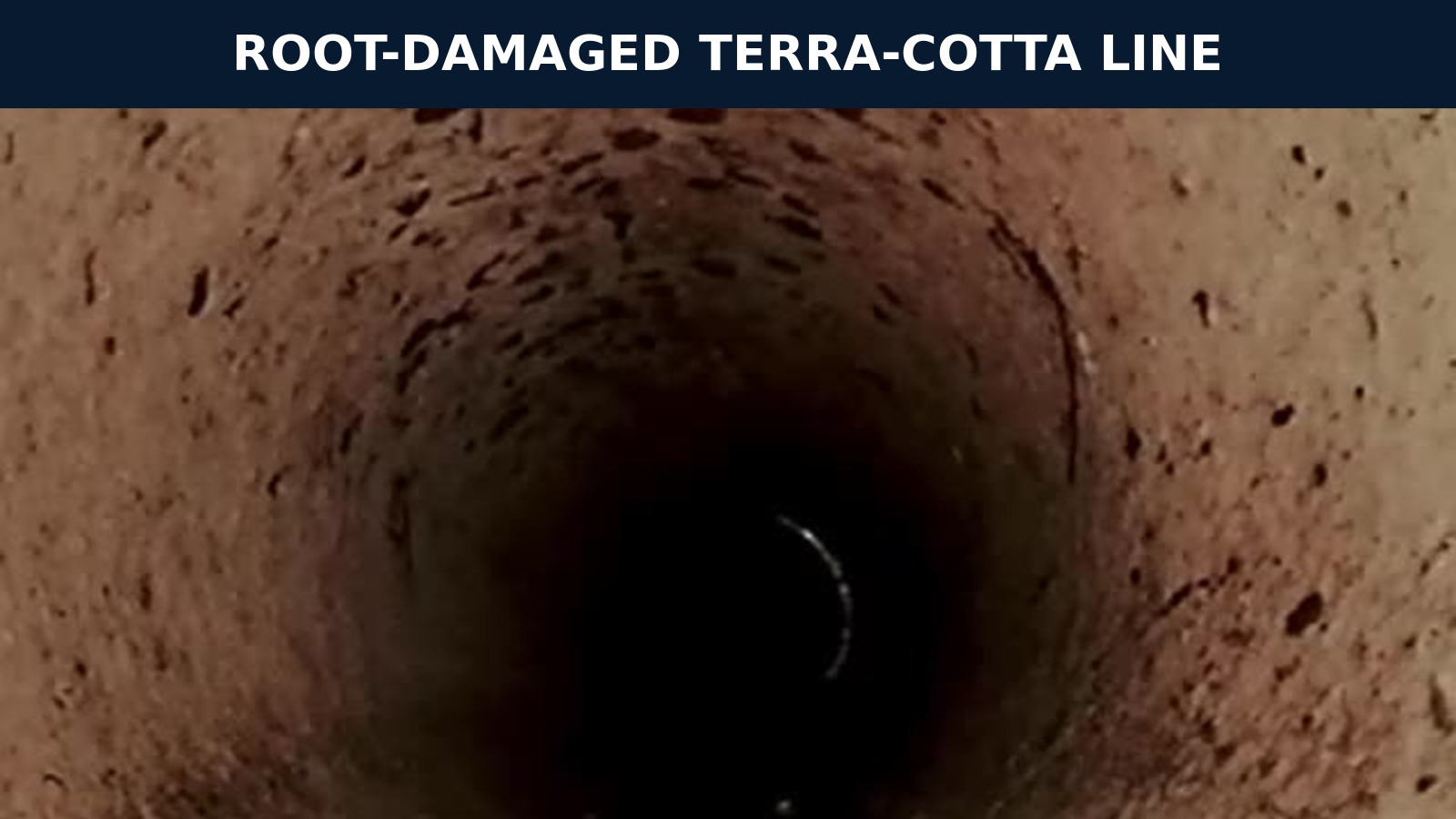
The initial inspection documented root intrusion at nearly every joint connection along the affected run. The camera also identified a broken terra-cotta wye near a bathroom and vent connection.
Terra-cotta pipe was installed in sections joined together underground. As those joints age, movement, separation, or cracking can create openings. Roots follow moisture and can enter through very small gaps. Once inside, they expand into the flow path, catch waste, and contribute to recurring blockages.
The camera evidence changed the diagnosis. This was not simply material sitting inside an otherwise sound pipe. The line had multiple entry points that allowed roots to return.
Why cleaning came before rehabilitation
Before a trenchless repair can be designed, the line must be cleaned well enough to evaluate its actual shape and remaining condition. ADR accessed the system, mechanically removed the root mass, flushed the line, and performed another camera pass.
This preparation step matters for two reasons. First, it restores visibility so damaged joints, fittings, offsets, and connections can be evaluated accurately. Second, a liner must follow the prepared pipe closely. Root masses and heavy deposits cannot be left between the host pipe and the new liner.
Cleaning is therefore more than a preliminary service. It is part of the diagnostic and quality-control process.
The trenchless rehabilitation plan
The project included approximately 55 feet of four-inch terra-cotta pipe. Access was created through the existing plumbing system and an exterior opening, allowing the affected run to be prepared without excavating the full length beneath the building.
After the line was cleaned and verified, ADR completed the trenchless rehabilitation scope and performed a final CCTV inspection. A two-way cleanout was also installed to improve future access to the system.
The purpose of the liner was to create a continuous interior pipe through the damaged run, covering the old joints that had allowed root entry while preserving the existing route below the property.
What property owners should learn from this project
A drain that repeatedly backs up after clearing needs a condition-based diagnosis. If roots return, the important question is not only how to remove them again. It is where they are entering and whether the underlying pipe can be repaired.
For older multifamily, commercial, and residential properties, a useful evaluation should establish:
- The pipe material, diameter, and approximate length.
- The locations and severity of root intrusion.
- Whether joints, fittings, or sections are cracked or separated.
- Whether the line can be cleaned back to a stable shape.
- Where access and active branch connections are located.
- Whether lining, spot repair, excavation, or a combination is appropriate.
Not every damaged terra-cotta line is a lining candidate. Severe collapse, major deformation, or unsuitable access can require excavation or a combined repair. The decision should follow cleaning and camera verification—not precede them.
Schedule a sewer evaluation
If your Baton Rouge property has recurring backups, root intrusion, or aging terra-cotta sewer pipe, Advanced Drainage Repair can inspect the line and document the condition before recommending a repair.
Call 504-321-3627 to schedule an evaluation or use ADR’s website inspection form.
Explore more practical guidance in the ADR Sewer & Drain Resources hub.